
The list of dead women I can name is long enough to be called a litany
On apartheid and men's violence and the long tail of catastrophe

Three women were killed in South Africa on the day our president and his delegation were in Washington DC wasting their time with Trump. And by the time the group had landed back in Joburg and the presidential motorcade had wound its way back to Pretoria, the number of murdered women had doubled and sixteen women had been raped.
This cycle is repeated every day: a woman is raped every three hours and three women are killed each day in South Africa.
As horrifying as it was, the murder of Olorato Mongale with her lovely nose ring and her pretty smile, was both tragic and unsurprising. It was someone’s turn next.
Olorato did all the ‘right’ things. She texted her friends and told them she had met a guy. She told them when she was leaving, and where they were going – standard protocol given the statistics. And then she got into his white Polo and hours later he had killed her. It was her friends of course, who sounded the alarm, just as they have taught themselves to do.
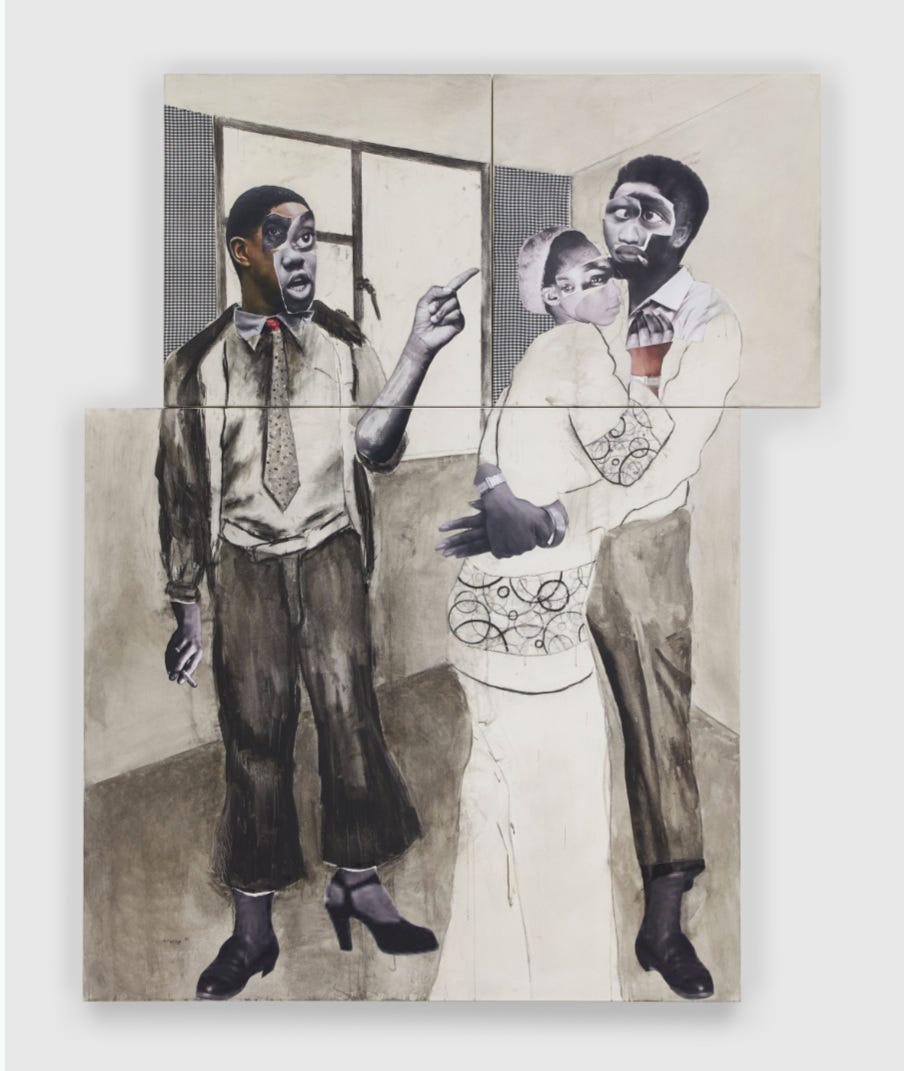
I can’t stop thinking about the white Polo. Maybe it’s because we all know someone with a white Polo.
There is something that has broken my heart forever about the ordinariness of that moment when she is caught on surveillance camera headed towards that white Polo. A young woman walking towards an ordinary guy in an ordinary car on an ordinary day, strolling confidently towards a murder that has become perfectly ordinary in a country where most crimes against women don’t merit a media mention.
I want to talk about this in a way that doesn’t retread old ground, I want to say that apartheid broke something in us that we now must fix and it’s not fair or right, but it is a fact
I want to talk about this, about the generational anger that is unleashed when you are forced to suffer while others feast. I want to talk about how our mothers learned to carry burdens that are far too heavy. I want to say that we have not yet learned how to talk about how their pain seeped into our bones; how we will pass on our grief at what life was for them and for us, if we do not get the help we need.
I want to talk about violence against women by remembering that our families were torn apart. I want to remind you of our fathers stepping off trains and sleeping in dormitories only to wake too early to dig and dig underground so far away from home that they had to forget about their hearts to survive.
I want to talk about what breaks when you must call a white man baas. What cracks inside you when a small white child call you by your first name as if you are not somebody’s mother, someone’s gogo.
I wish there was a tablet to take away the pain of watching our fathers diminished by drink, our aunties laid low by the same.
In the White House everyone was at pains to explain that the violence in South Africa is not aimed at white people, it is aimed at everyone – mainly at ourselves. But this is a heinously incomplete story; one racists love to tell.
No one told the truth, which is that our violence was imposed on us. No one pointed out that the crime statistics only make sense if you accept that something catastrophic happened to us.
I think about this all the time. I think about the wave of rage that will follow in Gaza for so many generations to come. What the Israelis have done is of such a grand scale, the violence so breathtaking that when freedom comes – as it must – the work of repairing the souls of those who have witnessed the worst acts against them will be long and arduous and must be made of the kind of love I have yet to see.
I am saying of course that we in South Africa continue to live in an emotional landscape created by racism. We inhabit every nook and cranny that was carved out by those who wanted us to live forever in inferiority. The violence we continue to enact is a feature, not a bug. As unsurprising as it is untenable.
For thirty years we have focussed on only the most superficial of wounds. We have talked about the white supremacists, but we have not begun to talk about the costs of resisting and surviving the white supremacist state and its predations.
Men’s violence – intergenerational, long-running, painful – marks the bodies of women and men. Men carry scars from late-night brawls and car crashes and too much alcohol. So many men I know are suicidal and they hurt us as they try to kill themselves. We are both the targets of their rage and collateral damage.
There is no language big enough to explain what it means to love your perpetrator and yet too many of us have survived an attack by someone we smiled at thinking ‘maybe he could be someone special to me.’
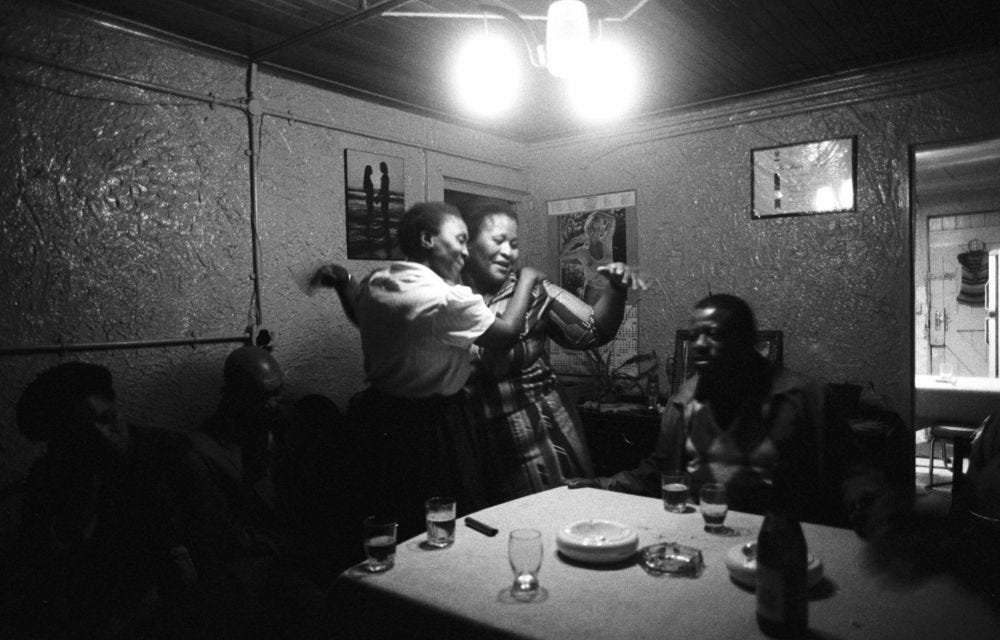
Those of us who came of age after 1994, fought for laws that would protect us and our mothers, sisters and the children we would one day birth. We thought our activism, our hoarse throats and marching for Gugu, Zoliswa, Anene, Noxolo, Reeva and Uyineneand would make a difference.
The list of dead women I can name is long enough to be called a litany.
***
I wonder what it would look like for South Africa to have a women’s truth and justice commission. Who would shepherd us through this reckoning and make sense of the inexplicable? Who would we listen to, if she said we should forgive our perpetrators and grant them amnesty.
How many decades would it take to get through the backlog of rapes and murders? How long would the list of perpetrators be? How many of us would be both witness and survivor? Would men cry for dead women they have never met? If the state paid a compensation package to every woman murdered, every girl disappeared, every child raped, would the bill bankrupt the nation?
How much does it cost to tell a child you love him, or to say to a girl that she is worthy of love without pain?
Should we pay stipends to those who love unconditionally? Surely, if we invested billions into a National Love Service the outcomes would be measurable.
***
In July 2014, a naked woman appeared in Sandton City shopping centre. She stood in front of Mandela’s statue – the one that captures the old man dancing and smiling, the way the people shopping in that mall probably like to think of him. The Mandela of Sandton.
The woman stood in front of Madiba naked as people around her watched, and giggled and took out their phones to record her. She was not self-conscious at all. She approached him and stood quietly as though in prayer. Or perhaps it was defeat. Then she leaned her head against his knee and stayed there, still and tender. Then she straightened up and walked away from the statue, towards a small pile of clothes. She bent and picked up her undies; stepped into them as though she were at home in her bedroom and no one was watching. She pulled a white slip over her head and then put a pink dress on top of that. Then she walked away as if nothing had happened. On the internet they called her Braveheart.
I think about her often. I think of her naked in that shopping centre and I hope she got what she needed. Mandela had been dead only a few months and so she seemed to be wishing him back to life. The bent of her head as she rested her head on his knee said she was tired. Black women in South Africa are busy. Black women pray to God on Sundays. We pray for our children and their children. We pray for more money, for less crime, we prayed for Mandela when he was in prison and then for his safety when he was released. Father God. We pray.
In an age of instant answers, mystery is rare and sacred and wondrous and so, I have learned to love unanswerable questions. I love to ask who was she and what was she doing because I know I will never know. So, I like to make up stories about her and in them she is always a hero.
Mostly, I like to think that she’s still alive.
"No one told the truth, which is that our violence was imposed on us. No one pointed out that the crime statistics only make sense if you accept that something catastrophic happened to us." Sisonke, your essay rattles us, like Toni Morrison, into a kind of painful coherence; seeing that cultures of gendered violence are unending; yet when we are able to imagine past the amnesia of avoidance and entanglement through the stories we share. To heal. Ngā mihi nui.
Thanks for writing this. It needed to be said. As I was listening to descriptions of the violence that exists in South Africa, it bothered me that the discourse had already stripped away the context: of Apartheid and colonialism, and the physical, spatial and psychological violence used to subjugate us. I've wanted to write about it - and I still might.